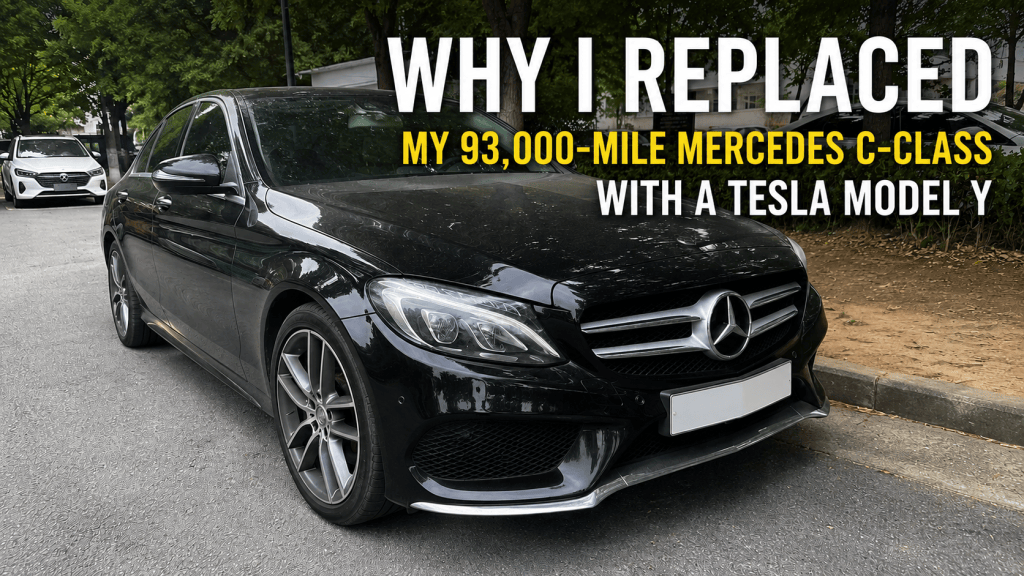
I ordered a refreshed Tesla Model Y in early May.
I ordered a refreshed Tesla Model Y in early May.
Mine is Stealth Grey with a black interior, and the price in Korea at the time was ₩49.99 million—roughly in the mid-$30,000s based on the exchange rate then.
I’ve since taken delivery, but this post isn’t a review of the Model Y. It’s about the decision I made before delivery: why I chose not to keep driving my Mercedes-Benz W205 C-Class after roughly 93,000 miles.
I didn’t switch because I suddenly stopped liking the Mercedes. I wasn’t looking for an excuse to buy a new car, either.
What changed was my life.
I became a dad, my daily driving increased, and the things I needed from a car were no longer the same.
The short version
- My Mercedes C-Class had about 93,000 miles on it when I decided to replace it.
- A child seat, stroller, and everyday family gear made the C-Class feel much smaller than it used to.
- With a 62-mile daily commute and charging available at both home and work, an EV finally made financial and practical sense.
I genuinely enjoyed owning this car. It fit my life perfectly before we had a child.
I didn’t replace the Mercedes because I hated it
My W205 C-Class was one of the most satisfying cars I’ve owned.
It was quiet, stable on the highway, and still looked good even after years of use. When it was just me—or my wife and me—the interior never felt particularly small.
The fact that I kept it for around 93,000 miles probably says more than anything else could.
I wasn’t actively trying to replace it. For a long time, my plan was simply to keep driving it.
But a car that worked perfectly for two adults started to feel very different once we became a family of three.
A toddler changed the space equation
The first reason I started thinking about a larger vehicle was space.
Before we had a child, the rear seat seemed perfectly adequate. Once I installed a child seat, it became obvious how much room it took away.
Then came everything else.
A stroller. A diaper bag. Extra clothes. Snacks. Toys. Blankets. And the random collection of things that somehow follows a toddler everywhere.
The C-Class didn’t suddenly become a bad car. It just stopped being an easy car for the way we were using it.
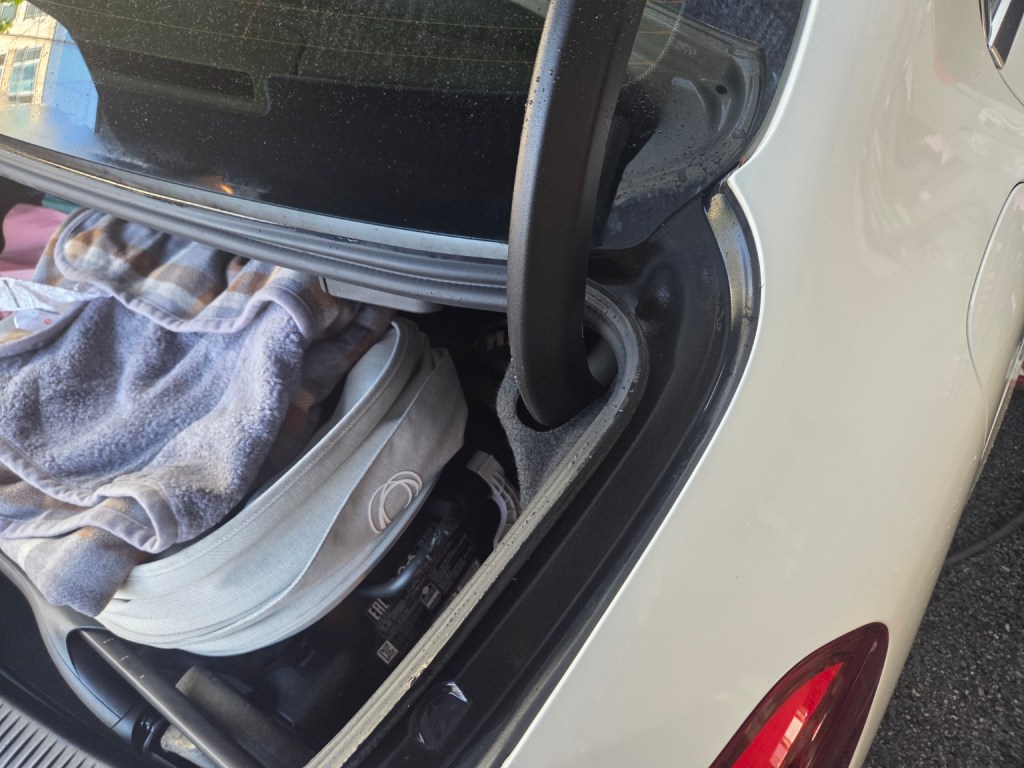
Once the child seat was installed, the rear seat felt much tighter than it had before.A stroller and a few everyday bags could fill the trunk surprisingly quickly.
My wife felt the same way. We didn’t need the biggest SUV we could find, but we wanted a car that made everyday family trips less of a puzzle.
At that point, cargo space and rear-seat usability started to matter more to me than the badge on the hood.
At 93,000 miles, repair costs were always in the back of my mind
Space alone probably wouldn’t have convinced me to replace the car.
The second issue was the uncertainty that comes with keeping a high-mileage German luxury car.
The Mercedes wasn’t falling apart. It didn’t have a major problem that forced me to sell it.
But once a car reaches that kind of mileage, you start wondering what the next repair might be.
Will the next visit be another routine service?
Or will it be the first really expensive repair?
I often used independent repair shops and looked for more affordable ways to maintain the car. That helped with the cost, but it didn’t completely remove the stress.
Saving money on maintenance and worrying about a possible major repair are two different things.
I still enjoyed driving the C-Class, but I could no longer ignore the financial risk of adding thousands of miles to it every month.
My 62-mile commute changed the math
The biggest reason I seriously considered an EV was my commute.
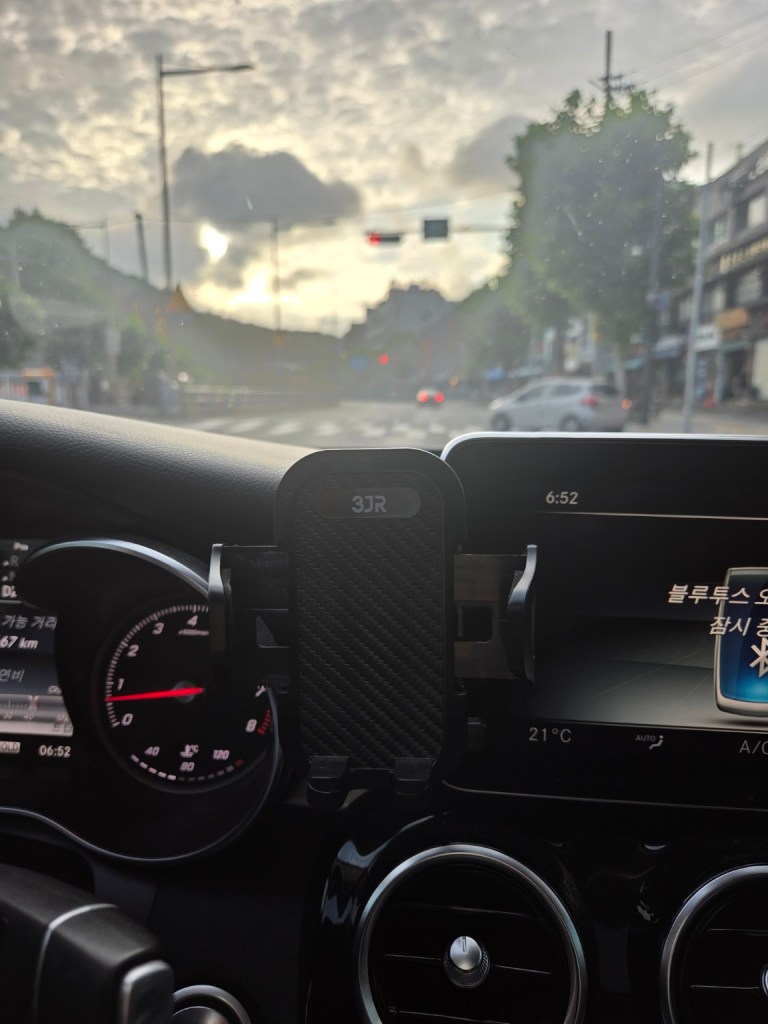
I drive about 100 kilometers round trip on a normal workday, which is roughly 62 miles.
At that distance, gas mileage isn’t a minor detail. Fuel becomes one of the biggest ongoing costs of owning the car.
If I only drove a few miles a day, switching to an EV probably wouldn’t have saved enough money to justify replacing a car I still liked.
But with a long daily commute, the calculation was different.
If I was going to buy a larger family car, I didn’t want to increase my fuel costs at the same time. I wanted something that gave us more space while also reducing the cost of driving so many miles.
That made an electric SUV much more appealing than a similarly sized gas SUV.
Charging at home and work made the Model Y realistic
I don’t think an EV makes sense for everyone.
Charging access can completely change the ownership experience.
I can charge at my apartment, and I also have access to charging at work. That means the car can charge while it would already be parked.
I don’t have to make a separate trip to a fast-charging station every few days.
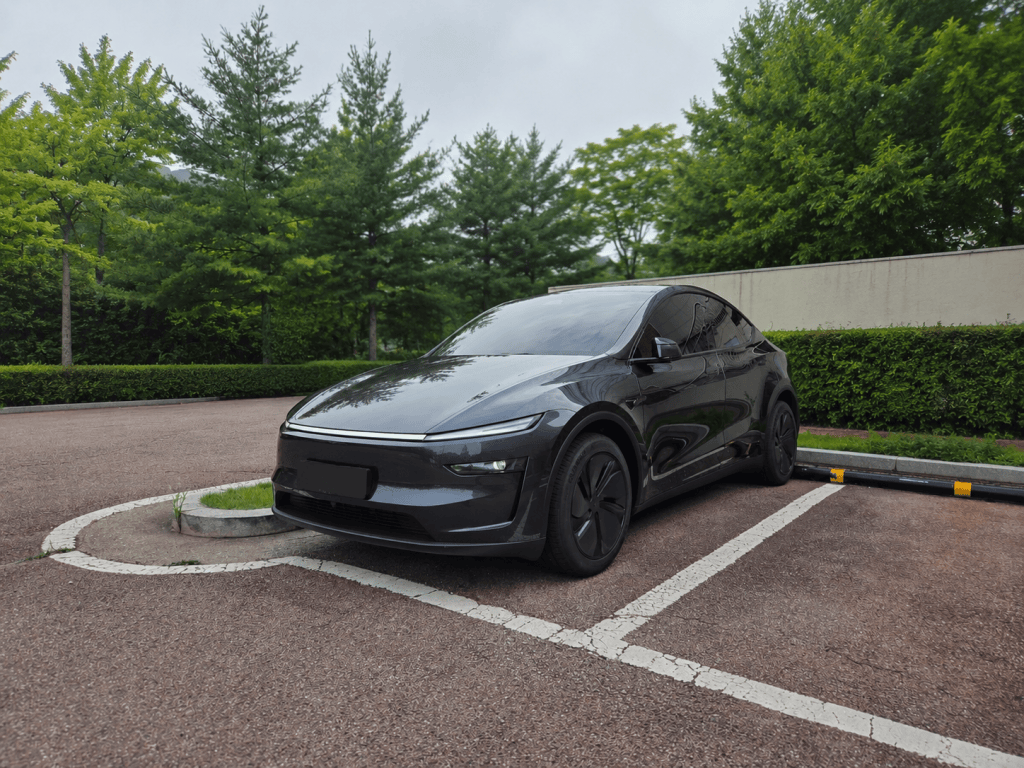
Being able to charge where I already park was a major part of the decision.
If I had to rely entirely on public fast charging, I’m not sure I would have chosen the Model Y.
But with charging available at both ends of my commute, an EV became practical instead of inconvenient.
Of course, an EV isn’t maintenance-free.
There are still tires, insurance, suspension parts, accident repairs, and other costs to think about. But replacing gas expenses with charging costs—and removing some engine-related maintenance—made sense for the amount I drive.
Without the lower running costs, I probably would have kept the Mercedes
If I only needed more space, I could have bought a gas or hybrid SUV.
But I’m not someone who likes spending more money on a car just for the sake of upgrading. Honestly, I’d usually rather invest the difference.
That’s why replacing the C-Class with a larger gas SUV was difficult for me to justify. I would have spent more money on the car while likely paying more for fuel as well.
Without the potential savings from charging, I probably would have kept the Mercedes for a while longer.
The Model Y stood out because it could solve several problems at once:
- More space for a child seat, stroller, and family gear
- Lower energy costs for a long commute
- Less anxiety about maintaining a high-mileage luxury car
- Convenient charging at both home and work
It wasn’t about buying the newest or most exciting car.
It was about finding the car that made the most sense for my actual life.
The four reasons I made the switch
1. The repair risk that comes with higher mileage
The Mercedes was still running well, but the possibility of a major repair became harder to ignore as the mileage increased.
2. The C-Class was getting tight for family use
A child seat, stroller, and everyday family gear quickly used up the available rear-seat and cargo space.
3. Gas costs added up during a 62-mile commute
Because I drive a lot, even a modest difference in energy cost matters over the course of a year.
4. I could charge at home and at work
Convenient charging removed one of the biggest downsides of EV ownership for my situation.
Mercedes C-Class vs. Tesla Model Y—for my life
This isn’t an attempt to declare one car objectively better than the other.
They were built for different purposes, and I was comparing them at very different points in their lives.
| What mattered to me | Mercedes-Benz W205 C-Class | Tesla Model Y |
|---|---|---|
| Family space | Tight with a child seat, stroller, and bags | More usable rear-seat and cargo space |
| Daily running costs | Gas costs add up quickly with a long commute | Lower charging costs with home and workplace charging |
| Maintenance concerns | Higher mileage made future repair costs harder to predict | Fewer engine-related maintenance items |
| Long-distance commuting | Comfortable, but expensive to fuel at high mileage | Better suited to my high-mileage routine |
| Fit for my current life | Excellent before we had a child | Better fit for our life as a family of three |
Once I looked at it this way, the answer became fairly simple.
The question wasn’t:
Which car is better?
It was:
Which car fits my life better right now?
The Model Y I ordered
Here’s the configuration I chose:
- Vehicle: Refreshed Tesla Model Y
- Exterior: Stealth Grey
- Interior: Black
- Korea-market price at the time: ₩49.99 million
[PHOTO 5 — Tesla order confirmation or app screen]
The Model Y configuration I ordered in early May.
When I placed the order, I hadn’t yet tested long-term efficiency, ride comfort, road-trip charging, or the true cost of ownership.
The decision was based on my commute, charging access, family needs, and expected running costs.
I don’t believe the Model Y is automatically cheaper or better for everyone.
Someone who drives very little—or has no convenient place to charge—may come to a completely different conclusion.
Who might relate to this decision?
My experience may be useful if you:
- Own a higher-mileage luxury car and worry about future repair costs
- Recently had a child and find your sedan harder to live with
- Drive a long distance to work every day
- Can charge an EV at home or at work
- Are deciding between a gas SUV, a hybrid, and an electric SUV
On the other hand, if you don’t drive much and charging would be inconvenient, the financial case for an EV may be much weaker.
The sticker price is only part of the decision.
Your driving habits and charging situation matter just as much.
My priorities changed before the car did
Before I had a child, I cared more about ride quality, design, handling, and the feeling of owning a premium car.
By those standards, the W205 C-Class was an excellent fit.
After becoming a dad, I started caring more about space, running costs, convenience, and how much effort it took to use the car every day.
The Mercedes didn’t become worse.
My priorities changed.
A good car and the right car for your current life aren’t always the same thing.
The C-Class was still a good car when I replaced it. But for a family of three, a 62-mile daily commute, and easy access to charging, the Model Y made more sense.
Knowing what I know now, I would make the same decision again.
Not because Tesla is automatically better, but because it solved the specific problems I actually had.


Leave a comment